
How can politicians – local and national – best support resident-led initiatives?
With renewed interest in neighbourhoods nationwide, our senior policy and parliamentary officer, Roshni Mistry, looks at how elected politicians can make space and share power with communities.
The Secretary of State for Housing, Communities and Local Government, Steve Reed’s latest essay expresses, ‘We need a state that is not just modern and technically adept but also a state that makes space for, and gives power to communities’. So how do we make this happen in practice?
Neighbourhood working is an increasingly crowded field. At present, there’s an estimated £10bn allocated across eight government departments for 17 different neighbourhood-level initiatives. There’s Pride in Place, the Community Wealth Fund, Neighbourhood Health Framework and Best Start Family hubs – to name just a few. This focus on hyperlocal policy has the potential to be transformative, but it will require new ways of working for a wide range of actors, including national and local politicians.
In March this year, the Big Local programme came to an end after 15 years of resident-led change. Drawing on our experience of delivering the programme, we’re now sharing what we’ve learned to help inform current and future neighbourhood working, before Local Trust closes in 2027.
Engagement was strongest when residents could clearly see how their involvement shaped real outcomes.”
Pride in Place
The flagship initiative of the government’s communities programme is Pride in Place, which empowers local people to shape the future of their neighbourhood, with up to £20m of funding and support for local regeneration to be delivered over 10 years. Neighbourhood Boards will play a key role in delivering the programme. They will comprise an MP, a Ward Councillor, residents, local businesses, civil society, and community organisations – led by an independent Chair.
Resident-led decision-making builds participation and legitimacy
Participation and ownership of local priorities in Big Local areas were directly linked to residents having genuine control over decisions about what to fund. Over a quarter of the approximately 5,000 residents who volunteered to join local partnerships reported it was the first time they had been active in their community in this way. Engagement was strongest when residents could clearly see how their involvement shaped real outcomes. Achieving this required:
- Outreach beyond the “usual voices”
- Investment in facilitation and community development
- Practical support for participation (e.g. childcare, timing of meetings)
- Transparent decision-making
- Ongoing communication and feedback.
So, how can the multiple initiatives within communities be most effectively organised to support the residents they are designed to serve?
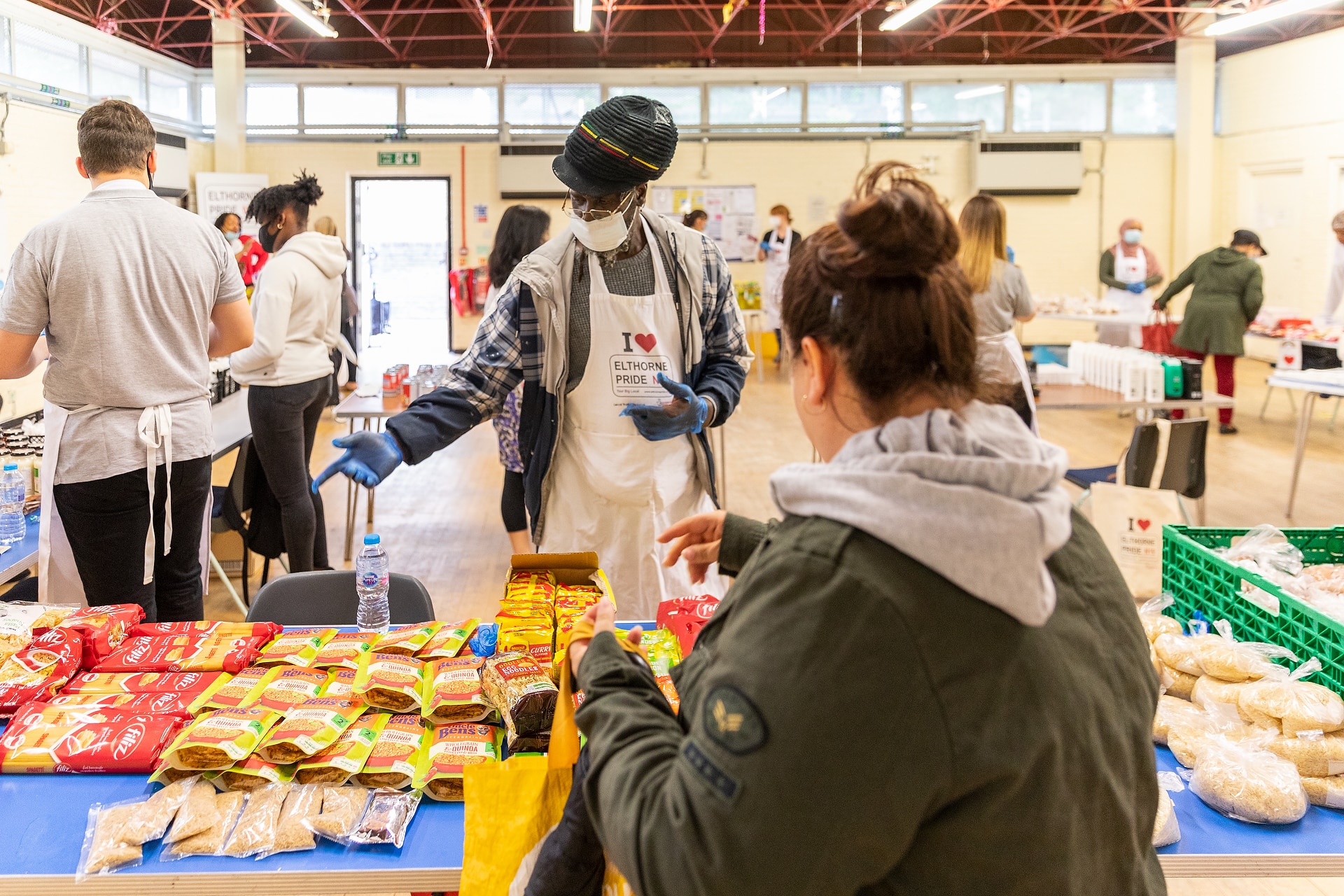
Volunteers from Elthorne Pride Big Local involved in a food distribution exercise to members of the community during COVID-19. Photo: Local Trust/Zute Lightfoot
Convening for maximum impact
The recent local elections have broken down the conventional three-party system across England, with record numbers of Green and Reform Councillors elected. MPs and Councillors will have to put personal politics and differences aside to work together and create the conditions needed to make real change in their areas.
Big Local demonstrated the importance of ensuring that representative and participatory democracy work together effectively. We found the most valuable contribution for politicians is creating the conditions for others to work together effectively. This included:
- Supporting community leadership rather than substituting for it
- Helping align institutions rather than control delivery
- Using influence to reduce fragmentation
- Reinforcing long-term local collaboration
Overcoming conflict
Throughout the Big Local programme, conflict emerged around competing priorities between organisations and residents, perceptions of unequal influence or access, and questions of representation and legitimacy. In many cases, disagreement was a sign of meaningful participation and that decisions genuinely mattered locally. The challenge is therefore not how to avoid conflict entirely, but how to manage it productively and democratically.
This is relevant for initiatives where MPs, councils, residents and delivery bodies all hold visible leadership roles. Effective neighbourhood governance will require balancing democratic mandates with participatory approaches in ways that are collaborative rather than adversarial.
MPs and Councillors can play an especially important role in helping manage these tensions constructively by:
- Convening different interests around shared outcomes
- Helping resolve institutional blockages
- Encouraging collaboration between agencies
- Legitimising resident participation
- Resisting pressures towards overly centralised control.
Broad community engagement should be treated as a core component of any neighbourhood initiative, not an optional add-on.”
Build community engagement into ways of working
Creating long-term, sustainable local change requires not only formal governance structures, but residents feeling informed, included, and able to influence decisions that affect them. Broad community engagement should therefore be treated as a core component of any neighbourhood initiative, not an optional add-on.
Experience from Big Local suggests that communities are more likely to remain engaged when their participation leads to visible change, however small. Early ‘quick wins’, responsiveness and consistent communication all help build confidence that engagement is worthwhile.
Local leaders can support this by:
- Championing inclusive participation
- Supporting local community infrastructure
- Creating multiple routes into decision-making
- Ensuring transparency around difficult choices
- Visibly responding to community feedback and providing updates on progress.
Keeping it local
Residents in doubly-disadvantaged areas want to play an active role in creating a positive future for where they live. This ambition will only be realised if all actors within areas work together effectively to deliver change. For new Councillors, MPs and residents, these new neighbourhood schemes provide a good opportunity to get stuck in on a long-term, resident-led project which should help to build vital social infrastructure in places that really need it.
Find resident stories, reports and guidance to help support and inform neighbourhood working on our new website Learning from Big Local.
Roshni Mistry is Local Trust’s senior policy and parliamentary officer.