
Why the lessons from Big Local are vital for designing fairer funding programmes
With growing investment in neighbourhood-level regeneration and increasing momentum behind participatory, place-based approaches, there is an opportunity to design funding programmes that are fairer, more effective and rooted in the strengths of local communities. In this blog, Meg Falck our head of programme, reflects on why the lessons from Big Local matter for the future of funding.
The Big Local programme has ended. But you don’t have to look far to see how its principles are resonating in current policy and practice: focussing on neighbourhood-level interventions, involving local residents in decision-making, and giving people both the time and support to drive change.
A lot of attention is on the Government’s increased focus on neighbourhood-level regeneration through the Pride in Place Programme, that will see up to £5.8bn invested in over 284 places over the next decade. While there are clear similarities to Big Local – long term investments targeting areas defined as being ‘doubly disadvantaged’ that gives residents control over the funds – there are also notable differences:
- the scale of funds, with £19m more per area than Big Local, and twice as many areas
- the role of local authorities and Neighbourhood Boards
- requirements regarding the rate of spend
- rules around the revenue capital spend split.
We’re sharing how this and other government programmes – including the £175m community wealth fund we’ve long campaigned for – can learn from the successes and challenges of Big Local to ensure the best outcomes for the communities that need it most.
Longer-term funding is becoming more common, recognising that meaningful and systems change takes time.”
Trends in the Philanthropy and funding sector
Looking beyond government investment, the funding, philanthropy and social impact sector is another important part of the picture, with recent research calculating the Impact Economy now represents 15 per cent of GDP at £428bn.
With over 14,000 UK grant-making organisations, grant-giving reached its highest-ever level of £23bn in 2024, against a backdrop of rising community needs, societal tension and political fragmentation.
We recognise the unique position of Local Trust and Big Local, as the largest ever non-state intervention into neighbourhood-level change, and that few funders can replicate Big Local’s scale.
Nevertheless, its core principles are at the heart of existing and emerging place-based funding practices:
- Longer-term funding is becoming more common, recognising that meaningful and systems change takes time. Many funders are moving to 5+ years grants as standard and we’ve seen an increase in 10+ year pooled funds like Propel and Regenerative Futures Fund.
- Participation, power and distributed decision-making continues to gain traction as part of a wider movement towards fairer and more rooted funding practices. Organisations like London Funders and IVAR have long-championed funders approaches that intentionally redistribute power, and there are numerous examples of participatory grant-making approaches like Camden Giving, TSIP’s Giving Lab and larger-scale programmes like Corra Foundation’s People in Place.
- Local infrastructure and capacity-building support is now widely recognised as essential. Evidence from Place Matters and Lloyds Bank Foundation shows that investing in tailored support and building capacity and infrastructure improves long-term sustainability, which we argue is even more vital in communities with little history of community development or under-developed community infrastructure.
These trends are only set to grow so it’s important that Big Local’s learning informs future programmes and fair funding practices.
We know the Big Local model works. Big Local areas saw steeper falls in overall crime and antisocial behaviour and more resilient labour markets than comparable areas. They also saw increased levels of civic engagement – 25 per cent of people involved in Big Local had never volunteered before, yet 58 per cent of participants have progressed to other civic or community positions – showing the impact of building the capacity of local residents and trusting them to make decisions. But that doesn’t tell the whole story.
In our final year as an organisation, we’ve partnered with a number of funder-membership organisations in key regions to deliver a series of learning programmes throughout 2026. Alongside funders, think-tanks, place-based organisations and the wider voluntary and community sector we’re exploring the ingredients that made Big Local unique, the programme-design decisions we made, what worked (and what didn’t) and how funders can incorporate this learning in future programmes.
Overall, Big Local shows that long-term, community-led approaches can deliver meaningful change, but they require time, trust, and sustained support.”
Three reflections on designing fairer funding programmes
Reflecting on the first seven events we’ve held, perhaps unsurprisingly, the most popular themes have been participation, representation and inclusion, and managing and overcoming conflict. While not unique to the Big Local programme, its long-term and resident-led nature surfaced distinct challenges, nuances and solutions.
Here are three things that I’m sitting with from the sessions so far:
1. Progress moves at the pace of trust – which takes much more than you think
In many Big Local areas, early progress was sometimes slowed by local scepticism – were local residents really being entrusted with £1m? – or perceptions about who controlled the funding. We heard a great example from Northfleet North Big Local about how they overcame perceptions about local authority involvement and the importance of identifying community leaders and achieving early ‘quick wins’.
This contrasted with insights from Somers Town Big Local (STBL) which had a stop-start delivery for many years that left local people frustrated. STBL turned this into their strength, galvanising local interest to bring new people into their work, and emphasised the importance of evidencing and demonstrating impact throughout, not just at the end.

Sports activities for youg people in Somers Town. Photo: Somers Town Big Local
Big Local started in 2012 but the majority of areas didn’t start actually spending funds until 2016 or event later. It really did take four or more years for people to build relationships and trust, to consult and plan, and for residents to genuinely believe that they had been entrusted with £1m – an important consideration for faster-paced programmes like Pride in Place.
2. In a programme designed around participation, participation barriers persist
Built into the core design of Big Local was the ambition to reach people who’d never been involved in formal community or decision-making structures. Given this, and the areas selected, you could say that the primary lens in terms of structural inequalities was class. But even with a resident-led model, structural inequalities limited who could take part.
Big Local areas outside London were most often predominantly white working-class communities, but race and class intersected differently in London and other urban areas. In London, Big Local partnerships were more diverse, younger and more heavily female, often with caring responsibilities and full-time work commitments. More transient populations also meant we often saw higher membership turnover.
Inclusion varied widely across Big Local areas, and a non-prescriptive approach sometimes made it difficult to address challenges consistently when they arose. We heard brilliant insights from Pimlico Million about how they adapted their governance arrangements and flexed their processes to ensure their partnership was more representative and fully inclusive.
But we also heard about the pressure felt by a few key individuals to drive this and to challenge, and how isolating this felt. While some areas successfully improved representation, we recognise that many would have benefited from earlier and stronger support from Local Trust, especially targeted support for individuals as well as the collective.
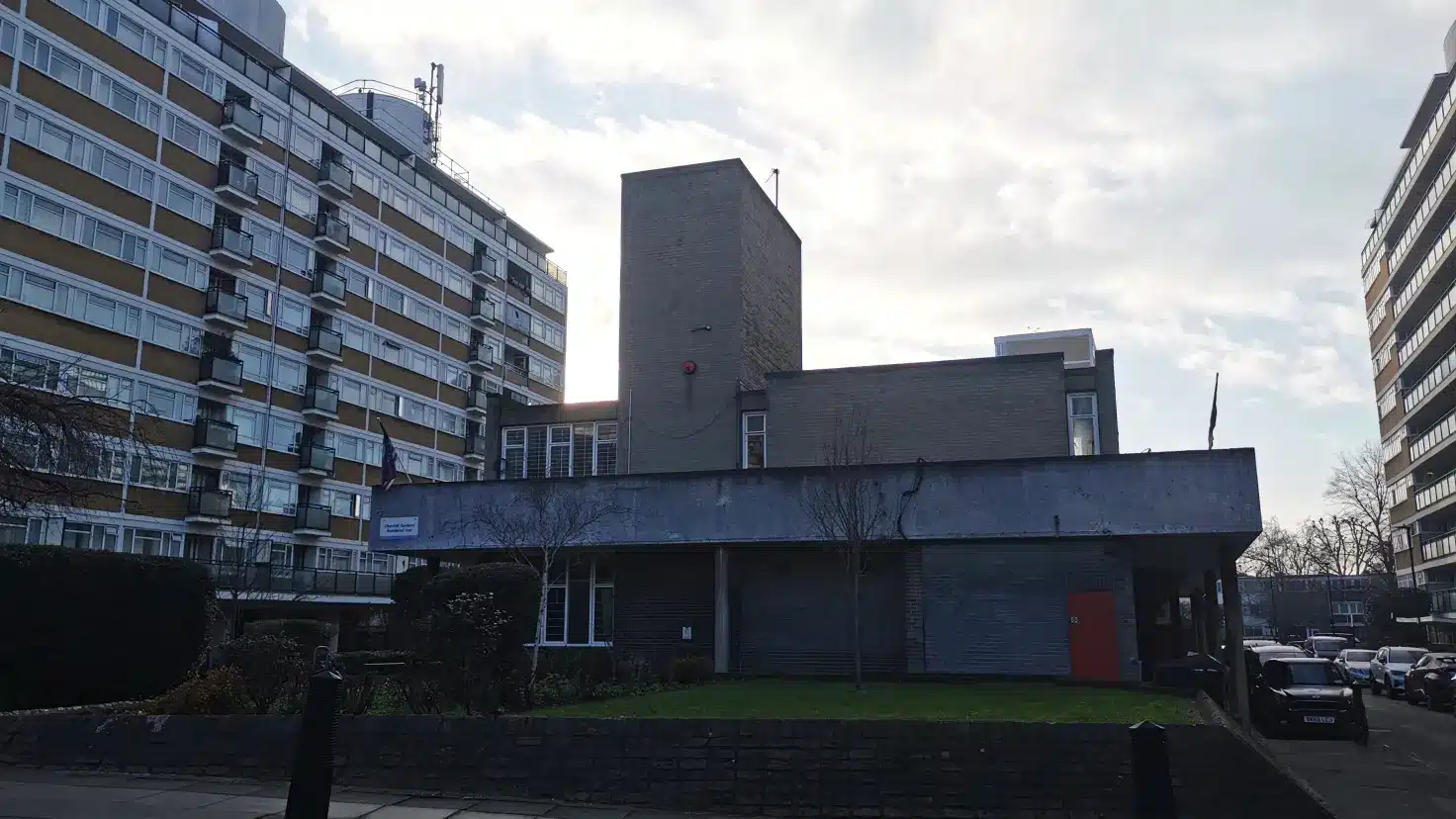
Community space within the Pimlico Million Big Local area. Photo: Local Trust
3. Conflict is inevitable but can be productive
Working across 150 neighbourhoods, you’d be hard pressed to find a Big Local area that didn’t experience some sort of conflict over the 10+ years, whether it was disagreements on priorities or scrutiny over historical spending decisions. Conflict could disrupt decision-making processes, programme delivery and working relationships, reinforce unequal power relations, and cause reputational damage or anxiety for those involved.
We heard from William Morris Big Local about how conflict in the early years, before any funds were even spent, caused substantial delays and frustration – but that by coming through that collectively improved their delivery and governance was strengthened. While support mechanisms were available – such as complaint resolution, independent chairs, or even formal mediation – they did not always satisfy all parties. What we consistently saw though was, where conflict resolution was led locally, this tended to lead to better outcomes in the long-term.
Overall, Big Local shows that long-term, community-led approaches can deliver meaningful change, but they require time, trust, and sustained support. Capturing and sharing these nuanced lessons will be essential for shaping future funding and regeneration efforts.
Keep track and sign-up for upcoming events here or contact programmes@localtrust.org.uk to find out more about learning events in your region.
Meg is Local Trust’s head of programme and has the overall responsibility of our funding to Big Local areas.