
Social Prescribing Day: strengthening health through community
As demand on frontline health services continues to grow, communities are increasingly stepping up to address the wider factors that shape people’s health and wellbeing. In this blog post, our strategic partnership manager, Ruby Frankland explores why Social Prescribing Day deserves more attention, and how community-led organisations are proving to be one of our most powerful tools for improving lives.
You may not have heard that it’s Social Prescribing Day today. It might not be the most high-profile date in the calendar, but it’s one that deserves our attention.
We know that many of the causes of the problems bringing people to A&E and GP waiting rooms are issues that can’t be treated by doctors or medicine alone. Our health service is under mounting strain with frontline health services confronted with social issues like loneliness, financial stress, debt and poor housing.
As demand on frontline services continues to grow, it’s becoming increasingly clear that improving health means looking beyond clinical care.
Why social prescribing matters for health and wellbeing
This is where social prescribing comes in. Link workers connect people to community-based support that addresses the root causes of their health and wellbeing challenges.
…community-led groups help address the wider factors that shape people’s health and wellbeing.”
We know from the Big Local programme that community-led organisations are best placed to provide this kind of support. Rooted in their local areas, they understand the realities people face and can create welcoming spaces where people feel comfortable seeking help and connecting with others. Working alongside health services, these groups provide a wide range of practical support. It could be anything from walking groups to help manage high blood pressure, to men’s sheds to combat isolation or gardening projects that give people purpose and connection.
Shifting care into communities: The ‘left shift’
We define this need for a shift of activity outside of hospitals and into communities as the ‘left’ shift. By delivering these kinds of services, community-led groups help address the wider factors that shape people’s health and wellbeing. They create opportunities for people to connect with others, build confidence and find practical support. In doing so, they play a vital role in helping people manage existing health problems, improve their circumstances and lead healthier lives.
A community-led model in action: Battersea Alliance
One powerful example of this comes from Big Local. The Battersea Alliance, a legacy organisation of Big Local SW11 has developed a locally rooted approach to social prescribing called ‘community prescribing’. This model places community organisations at the centre of preventative health support. Rather than relying solely on clinical referrals, it builds a trusted network of grassroots groups offering activities, peer support and community connections that address issues such as loneliness, mental health and financial stress.
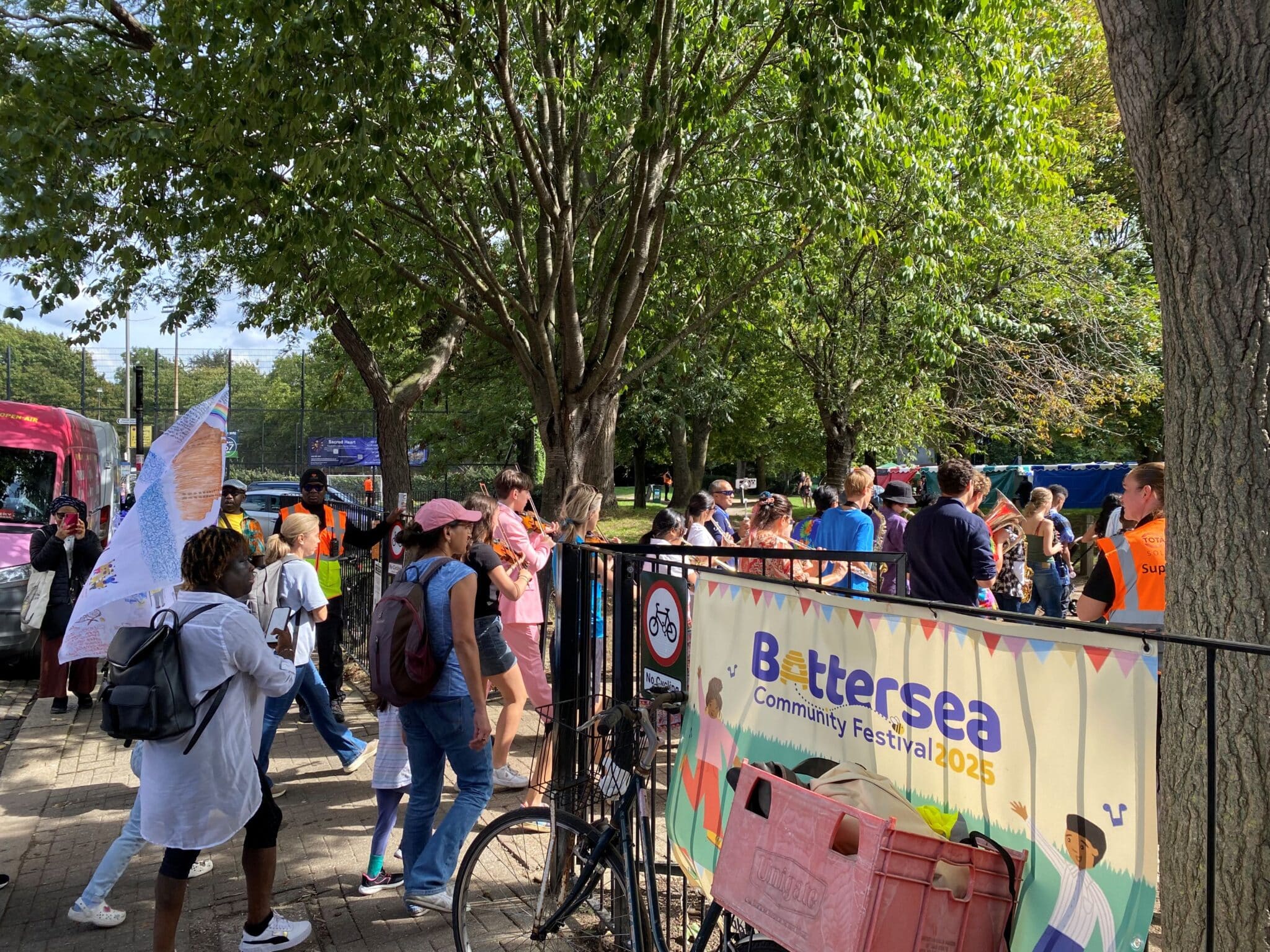
People arriving at Battersea community festival. Photo credit: Local Trust
By convening and investing in local organisations, the Alliance enables cross-referrals between trusted community groups, creating an ecosystem of support that reaches people who may not engage with traditional services. Evidence from its Social Return on Investment analysis suggests this relational, community-led approach generates significant value around £5 in social return for every £1 invested while strengthening social capital and improving wellbeing across the community.
Why sustainable funding for community organisations matters
It’s not all sunshine and roses though, this work requires appropriate and equitable funding for our VCSE sector. There was a wonderful analogy at our event last year with the National Academy for Social Prescribing which described Social Prescribers as the travel agents and the community activities as the holidays.
We need to ensure that the holidays are there for the travel agents to offer, otherwise their role becomes pretty useless! This means valuing the work of those community organisations that are running the gardens, the groups, the choirs and picking up the social cohesion and connection that we all need to thrive.
Learn more about community-led social prescribing
If you’d like to explore this further, take a look at our research: Community-led Social Prescribing: Lessons from Big Local and Beyond, along with a wide range of resources available on the Learning from Big Local website.
And if Social Prescribing Day wasn’t already on your radar, consider this a reminder of the vital role that communities play in supporting our health and wellbeing.
Find out more about how Big Local communities are supporting health and wellbeing through community-led social prescribing on our website Learning from Big Local.
Ruby Frankland is Local Trust’s strategic partnerships manager.