
Working collaboratively: What our ancestors – and Big Local – teach us
Collaboration across communities, local organisations and local government has been key to Big Local’s success. In this blog post, our senior programme coordinator, Natasha Almond, connects the dots between working collaboratively, thriving communities, and human resilience.
As humans, we have always survived better through working in collectives; we simply would not have survived if we had not had millennia to hone our ability to collaborate.
For over 90 per cent of human history, people lived in small hunter-gatherer bands, usually numbering between a few dozen and a hundred individuals. These groups survived not through hierarchy or command, but through intense cooperation, mutual dependence, and shared norms.
In these early societies, collaboration was essential to find food, raise children and stay safe. Power could be balanced because people knew each other well and could challenge behaviour that threatened the group. Survival depended on a deep, shared understanding of the environment – knowledge that was collective, not owned. In many ways, this mirrors the ethos behind the Big Local programme, which started from the premise that residents understand their neighbourhoods better than anyone else.
Working collaboratively is not a modern innovation. It is one of humanity’s oldest strengths.“
Research consistently shows that groups made up of people with diverse perspectives, backgrounds and ways of thinking solve complex problems better than more homogeneous groups. This is because they draw on a wider range of lived experience, knowledge and problem-solving approaches. A landmark study by Hong & Page (2004) found that diverse problem-solving groups outperform homogeneous groups of high-ability individuals. This provides a strong, evidence-based case for embedding equity, diversity and inclusion (EDI) at the heart of collaborative work.
Collaboration as a practice, not a slogan
Big Local embedded collaboration into its design by placing residents in the driving seat, with long-term, flexible funding and the freedom to shape priorities locally. Rather than imposing predefined solutions, the programme invested in relationships, trust and learning over time. This allowed partnerships to draw on diverse perspectives within communities and to work productively with organisations beyond them.
Crucially, collaboration in Big Local was not just about working together nicely. It was about:
- redistributing power
- valuing lived experience alongside professional expertise
- creating inclusive spaces where different voices could meaningfully influence decisions.
This is where EDI moves from principle to practice: collaboration becomes stronger when people who are often unheard are able to shape outcomes.
The role of networking and relationships
Networking played a significant role in enabling this kind of collaboration. Residents leading Big Local built relationships with voluntary organisations, social enterprises, service providers and local authorities. These networks increased access to knowledge and resources, helped avoid duplication, and strengthened collective problem-solving.
Effective collaboration with local government was particularly important. Where Big Local partnerships invested time in building trust, in clarity of roles and regular dialogue, relationships were more productive and less transactional. This was not always easy; differences in culture, pace and accountability remained, but where mutual respect developed, partnerships were better able to influence decisions and align services with local priorities.
Collaboration works best when it is inclusive, relational and grounded in place.”
Collaboration in action: Local examples
Across Big Local areas, the benefits of working collaboratively and inclusively are evident.
At Gaunless Gateway, collaboration was rooted in participation and local voice. The partnership funded and supported a wide range of community organisations and social enterprises, deliberately keeping decision-making close to residents. By recognising the value of different forms of knowledge and experience, the partnership helped build confidence, skills and wellbeing across the community – a practical example of inclusive collaboration enhancing collective capacity.
One of the many successes from the programme was the collaboration built with Trades4Care. The residents wanted to look at how they supported youth unemployment in the area and were able to provide a significant grant to Trades4Care, a painting and decorating business, which aspired to provide social good through training young people furthest from the employment market.
Local Trust’s light-touch and trusted funding model enabled this collaboration between the voluntary and private sector, which usual grants would be unable to fund. This collaboration provided work experience to over 40 young people, where over half found permanent employment and two young people are now employed directly by Trades4Care at a senior level.
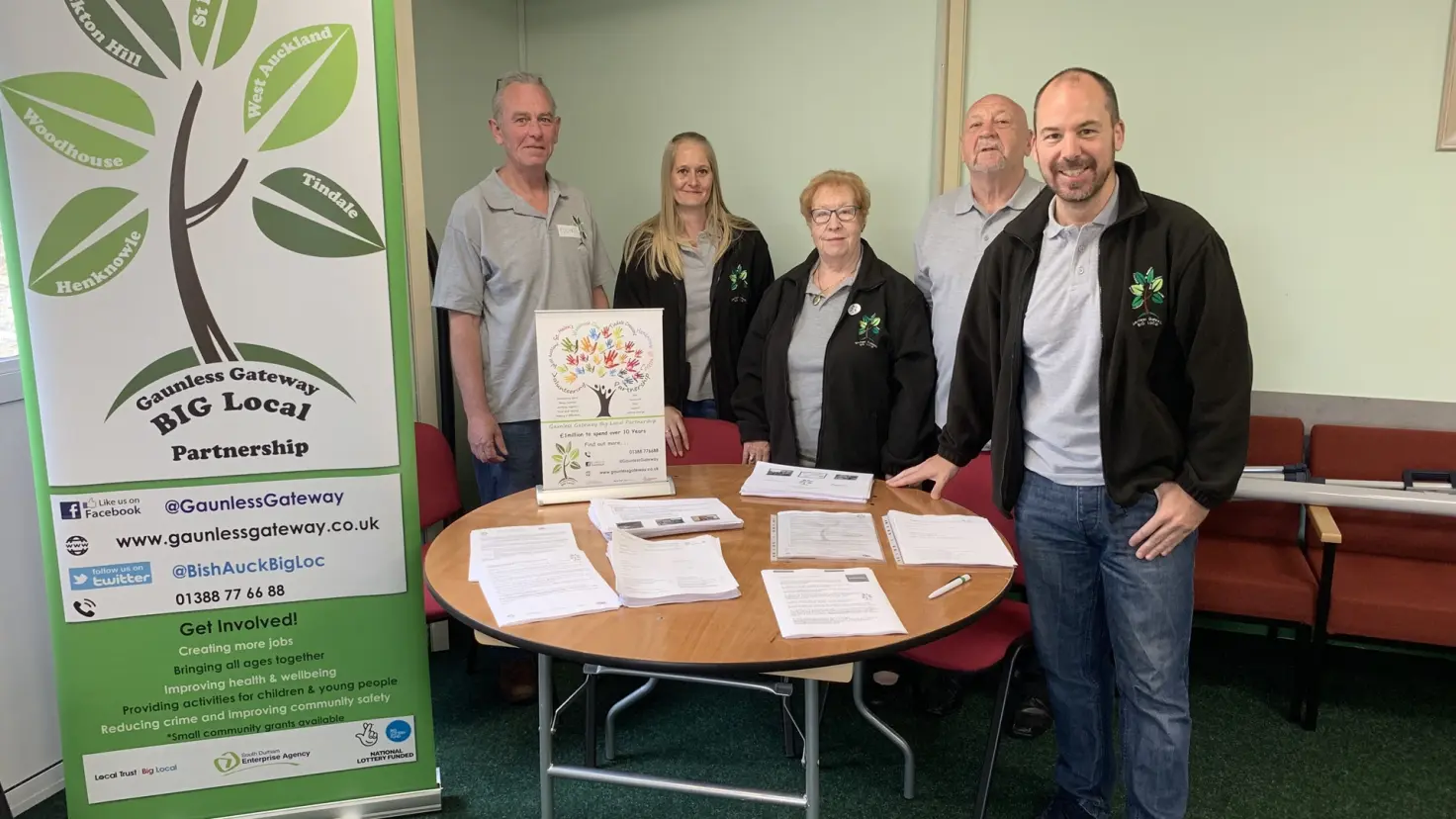
Members of the Gaunless Gateway Big Local partnership. Photo credit: Gaunless Gateway Big Local
At Tang Hall, sustained collaboration with voluntary groups, social enterprises and the local authority proved invaluable during the COVID-19 pandemic. Tang Hall Big Local stood out for the breadth of cross-sector partnerships that enabled its Hub to deliver extensive support to vulnerable residents.
On one visit, I saw queues for the food pantry stretching from the sports hall into the car park, alongside a wide range of statutory and voluntary services operating under one roof, including social prescribers and the Poverty Truth Commission.
These established relationships allowed for rapid coordination of volunteers, food provision and support hubs. The diversity of partners ensured the response was both responsive and rooted in real community need.
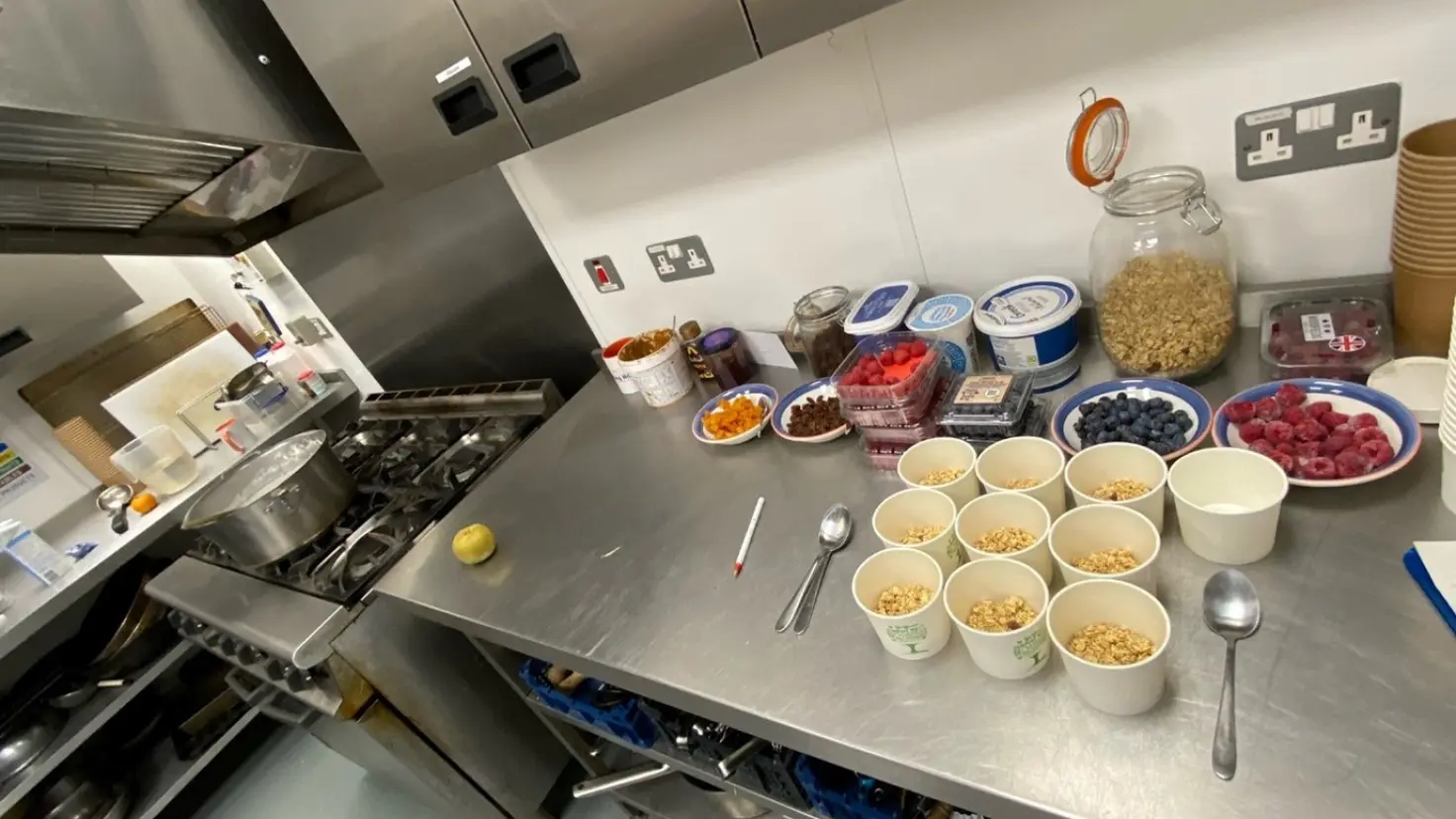
Preparing for Tang Hall Big Local’s Breakfast Club. Photo credit: Local Trust
Why this matters
The Big Local experience reinforces what our evolutionary history and academic research already tells us: collaboration works best when it is inclusive, relational and grounded in place. Diverse groups are better at navigating complexity, noticing blind spots and generating solutions that endure.
Working collaboratively is not a modern innovation. It is one of humanity’s oldest strengths. Programmes like Big Local show that when we create the conditions for shared power, diverse perspectives and strong relationships, communities are not only more effective, they’re more resilient.
Discover more about how residents across the Big Local programme worked collaboratively and in partnership to deliver plans and achieve change.
Natasha is senior programmme coordinator(areas) at Local Trust. She coordinates support for Big Local partnerships in the Northeast region and parts of Yorkshire.