
Why community spaces and places matter more than we realise
In this blog post, Local Trust’s programme manager, Helen Morton, explores the impact and value of investing in community spaces and the long-term benefits they provide.
Community spaces can often be seen as ‘nice to have’.
But over the last 15 years of the Big Local programme, we’ve seen repeatedly that shared spaces are often where the most lasting change begins.
About 10 years into Big Local, £23.4m had already been invested in community assets and spaces across 150 neighbourhoods – supporting around 200 different assets, from community centres and parks to playgrounds, skateparks and even a community-owned wind turbine.
From my time working on the programme, it’s often these investments in social infrastructure – the buildings, spaces and shared places – that create the conditions for the deepest and most enduring changes. What stands out isn’t just what was built, but what those spaces made possible.
[Community spaces] become places where people feel heard, useful and part of something bigger than themselves.
The ‘ripple effects’ of investing in shared space
When you invest in a community space, you don’t just get a building or a park, you get all the benefits of what that space makes possible.
Community spaces provide opportunities for people to connect, to access support they might otherwise miss, and to support one another. They become places where people feel heard, useful and part of something bigger than themselves.
A powerful example of this comes from L30’s Million Big Local in Sefton, Liverpool. An evaluation carried out by The Heseltine Institute for Public Policy, Practice and Place at the University of Liverpool used ripple-effect mapping to understand what happened when L30 invested in its community centre and community connector roles.
What emerged was social infrastructure acting as a foundation for wider improvements in community health, wellbeing and active citizenship.
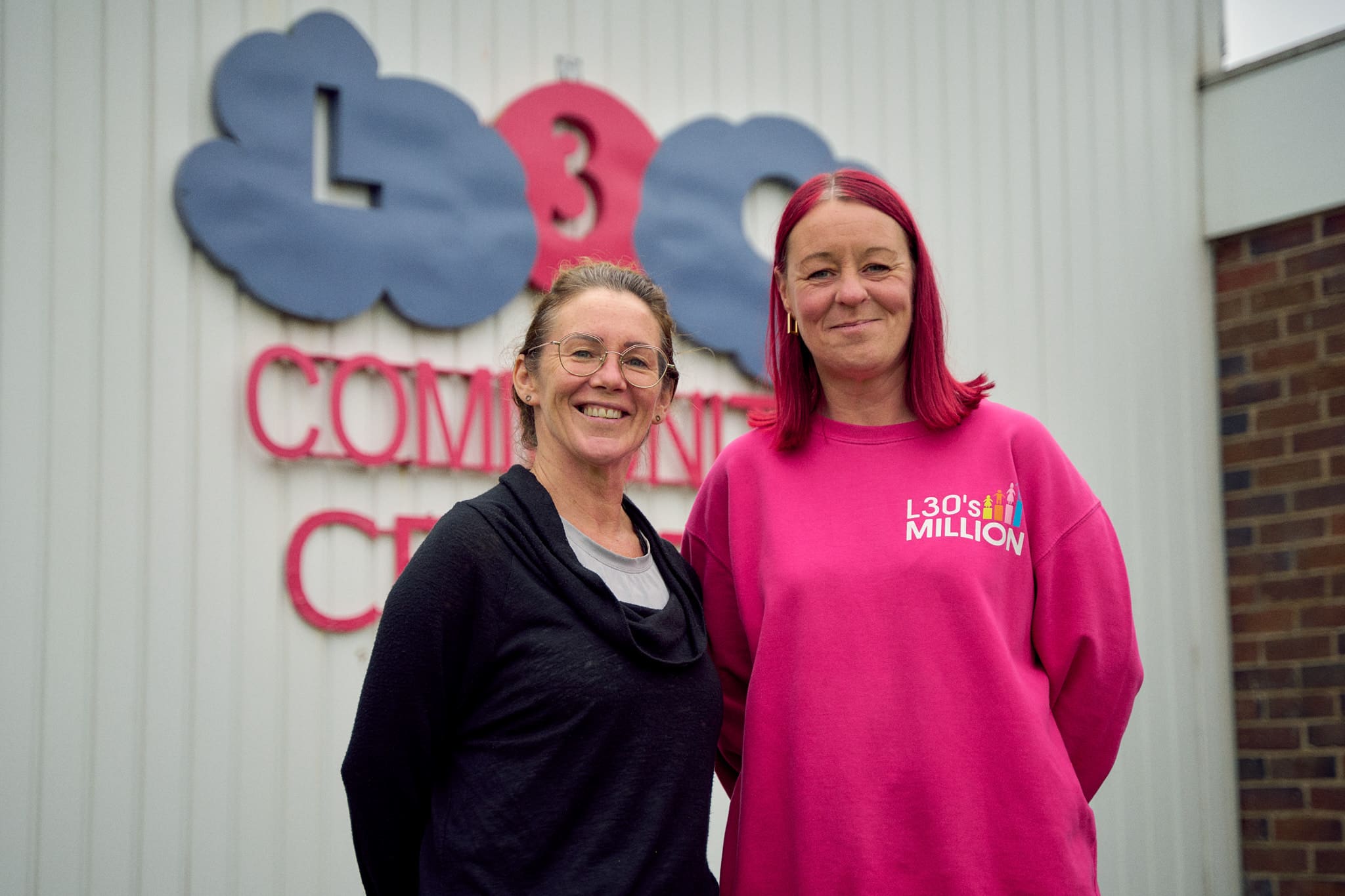
(Left to right) Suey Lee and Emma Anker stand in front of L30 Community Centre. Photo: Local Trust/Orrin Saint Pierre
The community centre didn’t just host activities. It provided a base for two community connector roles; people whose job it was to link residents with each other, with opportunities, and with local services. That combination of a physical space and dedicated connector roles amplified the impact significantly.
The building gave people somewhere to go; the connectors helped them feel confident enough to walk through the door.
The evidence from L30 shows that this investment spreads into stronger relationships, increased volunteering, improved confidence, and better connections with local services.
L30 Big Local haven’t finished spending their funding yet, when they do, a summary of their approach and activities will feature on Learning from Big Local.
Community assets and spaces create the conditions for people to help each other, rather than positioning residents solely as service users or beneficiaries.
Creating the conditions for people helping people
One of the things Big Local consistently demonstrated is the value of asset-based approaches to community development. At its heart, this is about recognising what’s already strong in both individuals and in communities rather than focusing only on what’s missing.
This is particularly relevant right now, with many communities navigating rising living costs, stretched public services, and fewer informal spaces where people can connect without barriers.
Community assets and spaces create the conditions for people to help each other, rather than positioning residents solely as service users or beneficiaries.
In many Big Local areas, community buildings became places where informal support flourished: a chat over a cup of tea or a group activity and neighbours looking out for one another. These moments don’t always show up in monitoring reports, but they matter deeply.
Crucially, these spaces also helped rebalance power. When communities had control over assets; deciding how they were used, who they were for, and what mattered most, it shifted relationships with local agencies and service providers. Trust could be built on more equal terms, often through informal contact rather than formal meetings.
Over time, these everyday interactions knit communities together in ways that no single project ever could.
It’s not just about buildings
When we talk about community assets, it’s easy to picture a community centre or a refurbished hall. But one of the lessons from Big Local is that assets don’t have to be buildings to be transformative.
In Noel Park, North London, the community invested in creating a “green triangle”, transforming an existing piece of green space into something that residents could actively use and care for. Monthly get-togethers at Moselle Meadow brought people together to maintain and enhance the space, learn gardening skills, and spend time outdoors with their neighbours.
Their flagship project involved substantial upgrades to Russell Park – the main green space in the area. Working closely with the local council, the partnership led a consultation on a £1m park upgrade project and used nearly £400k of their Big Local funds to leverage in council and other resources.
The upgraded playground, coffee kiosk and portacabin was an innovative way of creating a true ‘hub’ for the community without a physical building, and housed numerous other Noel Park Big Local projects, such as their annual fair, their bicycle repair scheme and their barista training programme.
This wasn’t just about improving the physical environment. It was about creating a shared sense of ownership and pride. The space became a reason for people to show up, to contribute what they could, and to feel connected to where they live.
For some residents, it was their first experience of being involved in shaping their local area. For others, it offered a more accessible way to engage than committees or consultations.
Long-term, local control over assets
Like many Big Local areas, Bourne used the freedom of the programme to think long-term about what would really benefit the community.
Local people told the partnership about their problems accessing services nearby and so working with the council and contractors, the partnership developed a new purpose-built community centre where residents could access support agencies and organisations locally. They also developed several parks and recreational areas, like the skate park they invested in following consultation with local young people.
Rather than just delivering short-term projects, they focused on assets and spaces that could be shaped, adapted and stewarded by local people over time. To ensure residents’ voices are heard after the Big Local programme ended, a resident-led steering group is in place to represent residents’ views to Poole Communities Trust who own the hub building.
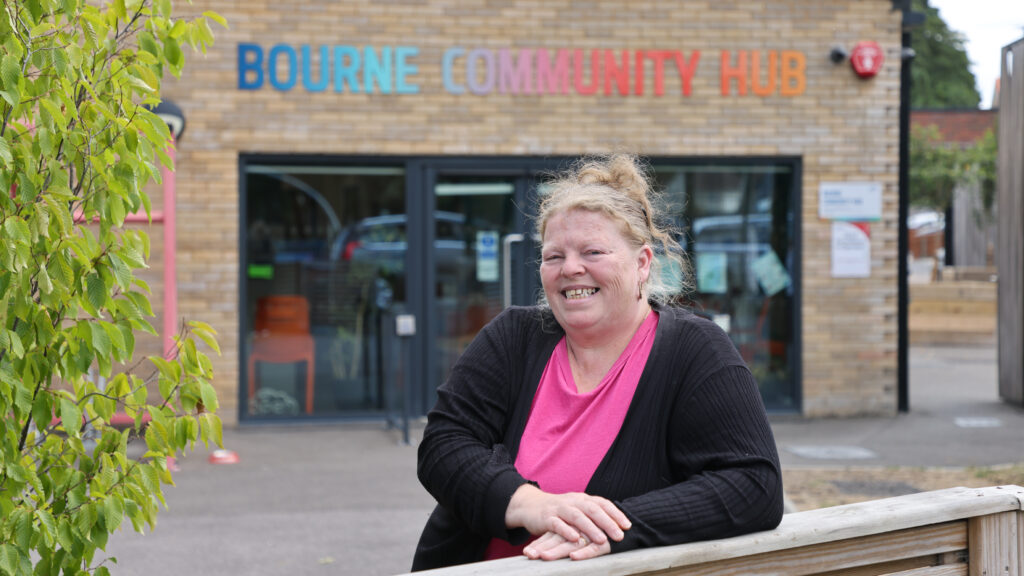
Kerry Manning, chair of Bourne Big Local, outside Bourne Community Hub. Photo: Local Trust/Orrin Saint Pierre
We’ve seen that when communities are given real control over assets, they take that responsibility seriously. Decisions are grounded in lived experience, and solutions are often more creative and resilient than those designed from outside.
What Big Local showed is that community control isn’t a nice-to-have or an add-on. It’s fundamental to making assets work for local residents, but this kind of thinking requires patience, trust and a willingness to accept that progress doesn’t always follow a straight line.
Why this matters
At a time when many communities are facing growing pressures, the role of shared spaces feels more important than ever. Community assets are a vital part of an ecosystem that supports wellbeing, connection and participation.
They are places where trust can grow, where confidence can be rebuilt, and where people can discover their own capacity to make change happen.
Using evidence from Big Local, our report with New Local, Community buildings: strong foundations for community renewal, shows the importance of long-term investment and support to ensure community-run buildings are sustainable in the long-term.
When we invest in places, we’re really investing in people. And when people are given the space, support and trust to shape their own communities, the impact reaches far beyond any single building or project.
You can explore many more examples of the assets created through Big Local, and the difference they’ve made, on the Learning from Big Local website.
Helen Morton is programme manager at Local Trust, coordinating our core support offer to Big Local areas.