
Learning from Big Local: evidence from 15 years of community-led change
Yesterday saw the launch of our new website – ‘Learning from Big Local’- a comprehensive account of the evidence and insight drawn from over a decade of resident-led change in 150 communities across England. In this blog, our CEO Rachel Rowney discusses some of what we’ve learned about building lasting community-led change.
Big Local was conceived of as an experiment, so the learning from the programme is an essential part of our story and we’re really pleased to be at point where we can share it. We are already seeing this learning being taken up by the government in its commitment to place–based, community–led development.
Last year, the government committed substantial funds to doubly disadvantaged neighbourhoods through the Pride in Place strategy and Community Wealth Fund both of which are long–term, place-based funding programmes that are intended to give residents the tools and decision-making power to effect change in their communities. We are proud to see how years of evidence from the Big Local programme have influenced government policy, but the potential impact of the programme does not stop there.
The Big Local programme was one of the most significant investments in community development ever made in England. For 15 years, 150 neighbourhoods across the country were trusted with long-term funding and real decision-making power.
Rather than prescribing solutions, Big Local supported communities to identify priorities and act on them, building their community’s capacity along the way. And as a result, the last 15 years has seen residents transform their communities in many amazing ways, including:
- purchasing and refurbishing community assets;
- skills and employment support;
- providing social infrastructure;
- creating better health and wellbeing;
- and running events and spaces that connect neighbours.
Why learn from Big Local?
As one of the most ambitious long-term, place-based programmes of its kind, Big Local offers evidence about what happens when communities are trusted with power, time and resources. Learning from Big Local sets all this out and explains why these lessons matter now, and how they can inform policy, funding and practice focused on lasting local change.
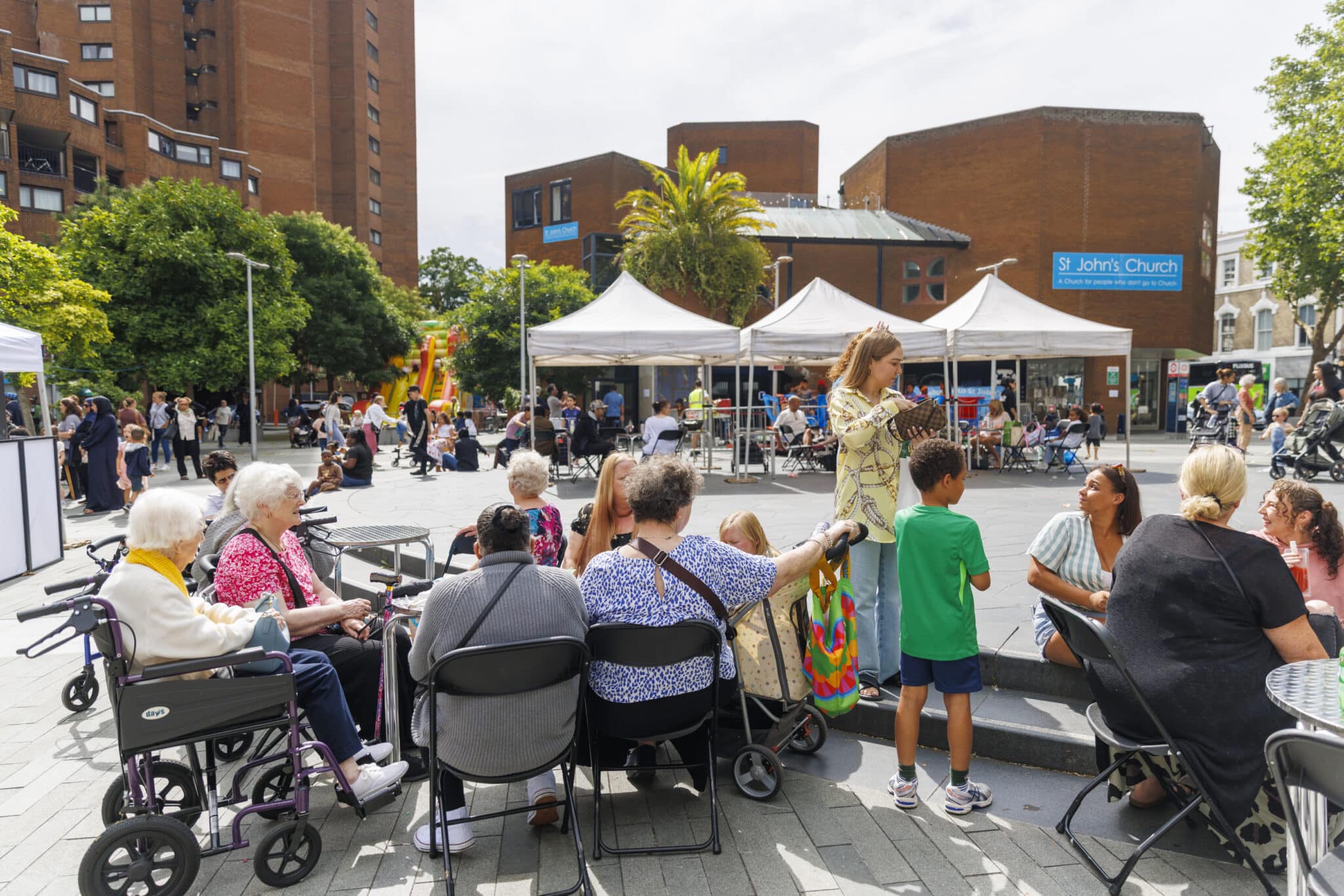
World’s End Estate and Lots Road Big Local summer event 2025. Photo: Local Trust/Claudia Leisinger
Long-term programmes allow for growth
Big Local is a long-term programme, allowing us to observe how community-led change unfolds over time. The early years of the programme were spent building trust and developing the skills of residents, laying the groundwork for gradual, patient delivery.
The programme’s duration also enabled communities to learn and develop plans based on their own experiences. Priorities shifted, governance evolved, and new leaders emerged. Big Local demonstrated how social capital accumulates, relationships deepen, confidence grows, and communities become better able to respond to external shocks and new opportunities. These outcomes cannot be engineered through short bursts of activity; they emerge through sustained investment and reflection.
Resident-led decisions promote trust in the community
The Big Local programme placed residents at the centre. Unlike many community initiatives that consult residents while retaining control elsewhere, Big Local trusted communities with real decision-making power over funding, setting the priorities and direction of the programme locally. Their relationships, judgements, conflicts, and choices shaped what the programme became in each place. This approach revealed both the potential and the complexity of community-led change.
Residents brought deep local knowledge, legitimacy, and long-term commitment, but they also faced challenges: balancing differing priorities, sustaining momentum over time, and responding to an uncontrollable external environment (not least supporting communities through Covid). Big Local did not treat these tensions as failures; they were integral to the learning and creating something that will outlive the programme. Crucially, the programme showed that resident leadership develops through doing. Confidence, capability, and collective power grew as communities made real decisions and saw the results.
Place–based approaches allow for flexibility
Each community is different, faces unique challenges, and has distinctive needs. The Big Local programme recognised this and allowed for each community to design how the programme would be delivered. The programme succeeded precisely because it did not impose a one-size-fits-all model.
Place-based approaches allow for the contextual, adaptive responses that standardised programmes cannot deliver. Effective place-based interventions must start with deep local knowledge and give communities the power to shape interventions that fit their specific circumstances.
Big Local shows that when you invest at the right scale – hyperlocal neighbourhoods at an average of 8,000 – communities can build the relationships and trust needed for collective action. This is the level at which social capital is strongest and civic participation most feasible. Policy should embrace this scale rather than defaulting to top-down delivery through local authorities or large national organisations.
Social infrastructure is as important as physical infrastructure
Big Local has shown us that social infrastructure – the relationships, networks, organisations, and institutions that bind communities together – is vital.
Big Local areas have invested heavily in social infrastructure. They have created community centres, organised festivals, supported voluntary groups, facilitated resident meetings, trained local leaders, and built connections between different parts of their communities. This kind of impact may be less visible than a new railway station, but its impact on wellbeing and civic vitality is profound.
The pandemic exposed both the importance and fragility of social infrastructure in our neighbourhoods. Communities with strong networks and active organisations were better able to support vulnerable residents, organise mutual aid, and maintain morale during lockdowns.
What to expect from Learning from Big Local?
The Learning from Big Local website has so much to explore with a wide range of research, practical insights, resident stories, Q&A articles, themed resources and reports that help you explore what happens when communities lead lasting change.
We invite you to visit our new Learning from Big Local website today.
Rachel Rowney is Local Trust’s chief executive. Rachel joined Local Trust in 2012, originally as a programme manager, and joined the senior leadership team in 2016.