
How have the most disadvantaged communities improved health and wellbeing on their own terms?
Sue Ansarie started her Big Local journey as a resident volunteer. Today, she’s part of our research team, bringing lived experience into how we learn from community-led change. In this blog, Sue shares insights from across Big Local areas on improving health and wellbeing in neighbourhoods.
Thinking back to the early days of a Big Local residents’ meeting, where I participated as a resident volunteer, my confidence and self-esteem were very low. The meeting felt strange, and people were talking about how some funding from a new programme could be used to make our area better. The programme was based on the principle that residents themselves know most about what their area needs. Given my firsthand experience of living in a disadvantaged area, the scale of needs felt daunting. Yet lived experience became our foundation for community-led action.
My journey reflects what the Big Local programme has achieved as a national initiative.″
Health and wellbeing, prioritised by and for residents
Residents know most about the challenges affecting their communities. They understand challenges such as: poverty, social isolation, and insecure work; run-down or closed-off land; a lack of buildings or spaces to meet, jobs and services. They understand how all of these affect daily life. These circumstances are often major contributors to health inequalities.
In fact, out of 150 Big Local areas, 104 areas prioritised Big Local funding to support and work towards better health and wellbeing in the face of very real challenges. Communities experiencing high levels of disadvantage and unmet needs came together to focus on practical ways they could make a positive difference in people’s lives. In relation to the wider determinants of health, community-led activities focused on:
- increased opportunities for social connection, and places to meet and engage in physical activities
- setting up mutual aid initiatives to access free or reduced-cost food, classes on cooking healthy meals, school holiday lunches for school-aged children and lunch clubs for older people
- access to affordable recreation and green spaces.
These actions provided support before people reached crisis point or needed referral to formal services.
This sense of being valued, and having ownership and control is a powerful sustaining factor, especially in places that have experienced long-term neglect, stigma and disinvestment.″
As skills, confidence and networks grew, some communities began working in partnership with local health services. For example, in Ridge Hill, Greater Manchester, residents developed a partnership with a local Primary Care Network. This led to drop-in health clinics and connections to wider health services such as Population Health and Be Well, delivered locally from Ridge Hill Together Community Hub.
In Wormley and Turnford, Hertfordshire, residents secured a local community centre that had been earmarked for demolition. The space became a focal point for people to come together and socialise, alongside health and wellbeing initiatives, such as allotment gardening and walking groups. These activities also accepted referrals from the local GP surgery through social prescribing.
In the East Midlands, Coastal Communities Challenge responded to a specific local issue of older men experiencing social isolation. Residents decided to invest in a disused toilet block and transform it into a Men’s Shed. The Shed offered a welcoming place to socialise, take part in craftmanship activities, and access information on health issues, such as depression, suicidal thoughts and prostate cancer. In fact, Men’s Sheds proved to be a popular initiative across several areas, specifically to reduce social isolation and as a low-key way to access health-related information and support.
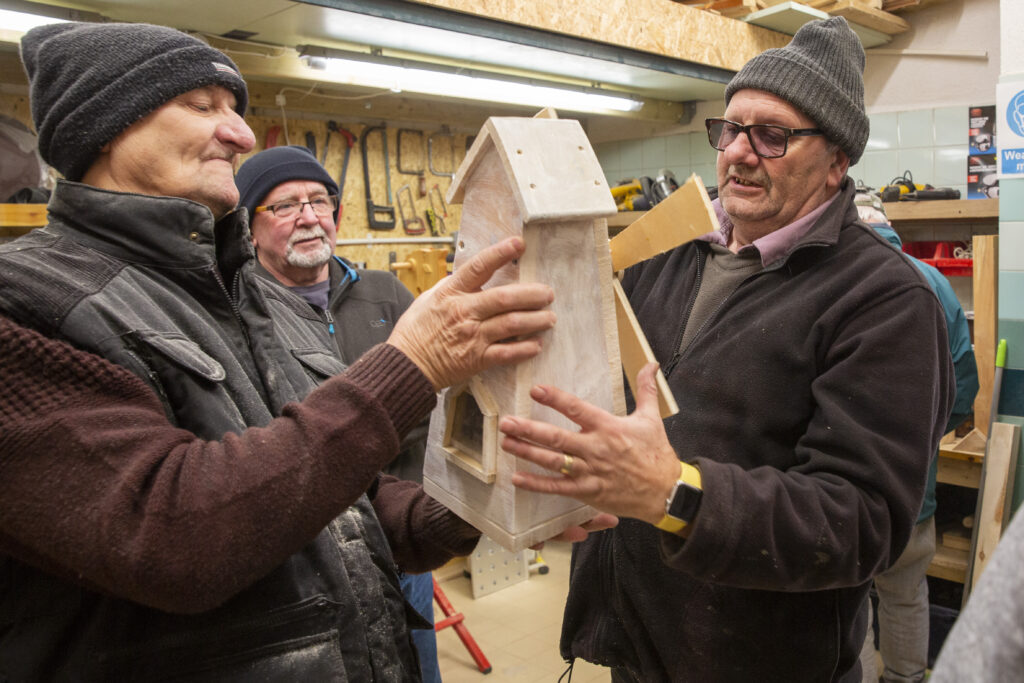
Training in woodwork skills at the Mablethorpe’s Men’s Sheds, supported by CCC Big Local. Photo: Andy Aitchison / Local Trust
What does this tell us about improving health and wellbeing in the most disadvantaged communities?
Many of the community-led health and wellbeing initiatives started with conversations, relationships and small practical steps to make life better. Community-led support has strived to meet people where they are. Such support can be incredibly effective when formal health and wellbeing services can feel intimidating, judgmental, or out of reach. Rooting responses in community need has generated increased trust with those seen as disengaged by traditional health services and has provided accessible pathways for support.
Over the 10- to 15-year period of the Big Local programme, providing funding and support, health and wellbeing initiatives were developed, lived experiences were valued, and a rich amount of knowledge was gained about what can be achieved when residents take the lead. This sense of being valued, and having ownership and control is a powerful sustaining factor, especially in places that have experienced long-term neglect, stigma and disinvestment.
And what happened to me after those early days?
I grew in confidence, skills, and self-esteem. I secured employment in the Local Trust research team that has gathered the learning from the Big Local programme.
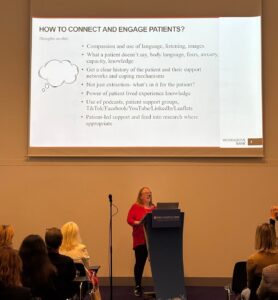
I also had the pleasure of joining a lived experience expert panel for the Independent Commission on Neighbourhoods. I also volunteer in a Clinical Research Collaboration at Guy’s and St Thomas’ Hospital and presented at an international health conference in Amsterdam.
My journey reflects what the Big Local programme has achieved as a national initiative. When residents and communities are trusted, supported, given ownership, and control, they can improve health and wellbeing in ways that the formal health system alone can’t.
For further insight into community-led health initiatives, read our article on the Learning from Big Local website exploring what Big Local areas did to improve health.
Last image: Sue Ansarie at the international health conference in Amsterdam. Photo: Sue Ansarie.
Sue Ansarie is Local Trust’s research assistant, supporting the research team across a range of research activities and team administration.